18 Oct 2026
Tracing Shifts in Local Governance Across Manitoba's Interlake Municipalities
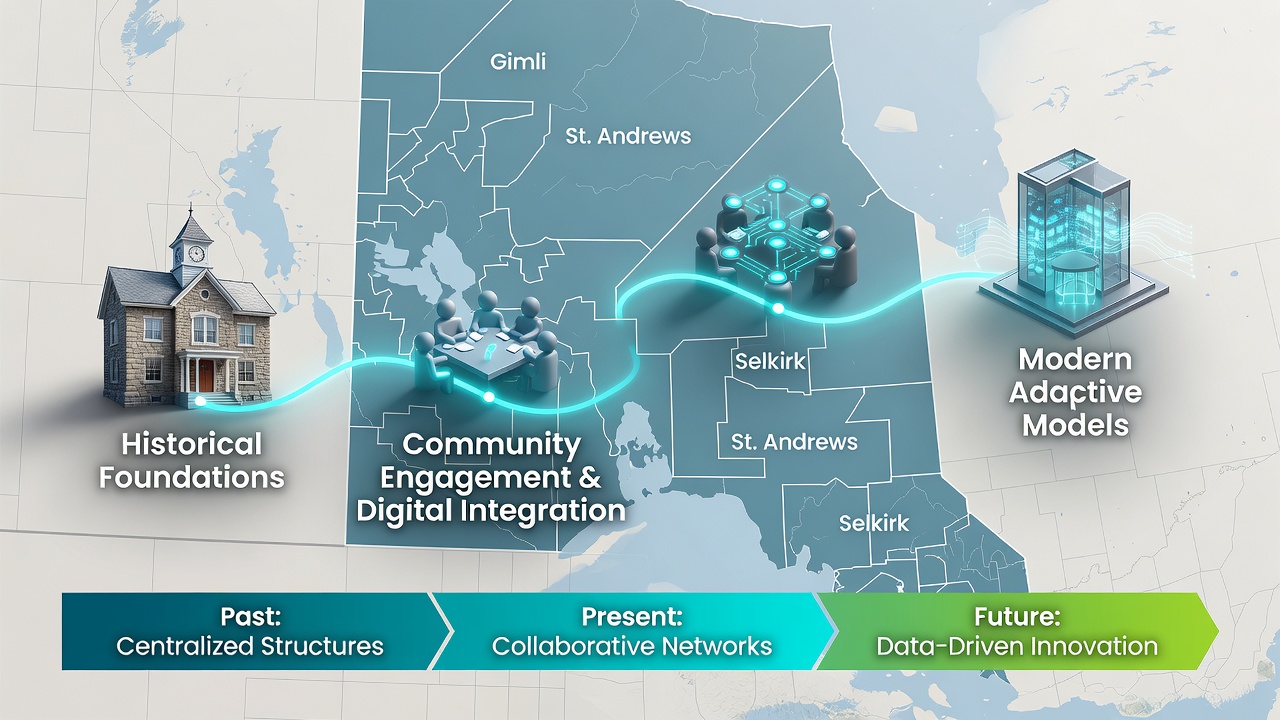
Local governance structures in Manitoba's Interlake region have undergone measurable adjustments since the mid-20th century, driven by provincial legislation and demographic data that reveal population redistribution across municipalities such as Armstrong, Bifrost-Riverton, and Fisher. Researchers at the University of Manitoba have documented how amalgamation policies in the 1960s and 1970s consolidated smaller rural districts into larger administrative units, reducing the total number of separate councils while expanding service delivery responsibilities for remaining entities. Data from Statistics Canada shows that Interlake municipalities experienced a 12 percent population decline between 1991 and 2016 in several rural pockets, prompting reviews of taxation models and infrastructure planning that continue to shape council agendas today.
Historical Foundations of Interlake Administration
Early governance in the Interlake emerged from district and municipal acts passed by the Manitoba legislature in the late 1800s, establishing boundaries that reflected agricultural settlement patterns along the shores of Lake Winnipeg and Lake Manitoba. Those who've studied archival records note that initial councils focused on road maintenance, school districts, and drainage projects essential for farming communities, while provincial oversight remained limited until the introduction of the Municipal Act in 1902. Over subsequent decades, amendments introduced requirements for elected reeves and councillors to manage growing demands for water management and health services, setting precedents for the multi-municipality coordination seen in later years.
By the 1950s, provincial reports indicated that fragmented boundaries created inefficiencies in emergency response and utility provision, leading to voluntary mergers that reduced administrative overlap. Observers note that these early consolidations laid groundwork for the more structured reforms that followed in the 1970s, when the province encouraged larger units capable of accessing federal funding programs for regional development.
Modern Reforms and Data-Driven Adjustments
Legislative updates in the 1990s and early 2000s further refined governance frameworks, incorporating performance metrics that tracked service costs per capita and resident satisfaction surveys conducted by the Association of Manitoba Municipalities. Figures reveal that Interlake councils adopted shared services agreements for fire protection and waste management during this period, resulting in documented cost savings of 8 to 15 percent in participating districts according to provincial audits. And because October 2026 marks the next municipal election cycle under updated campaign finance rules introduced in 2022, candidates across the region are preparing platforms that address broadband expansion and climate adaptation measures tied to lake-level fluctuations.
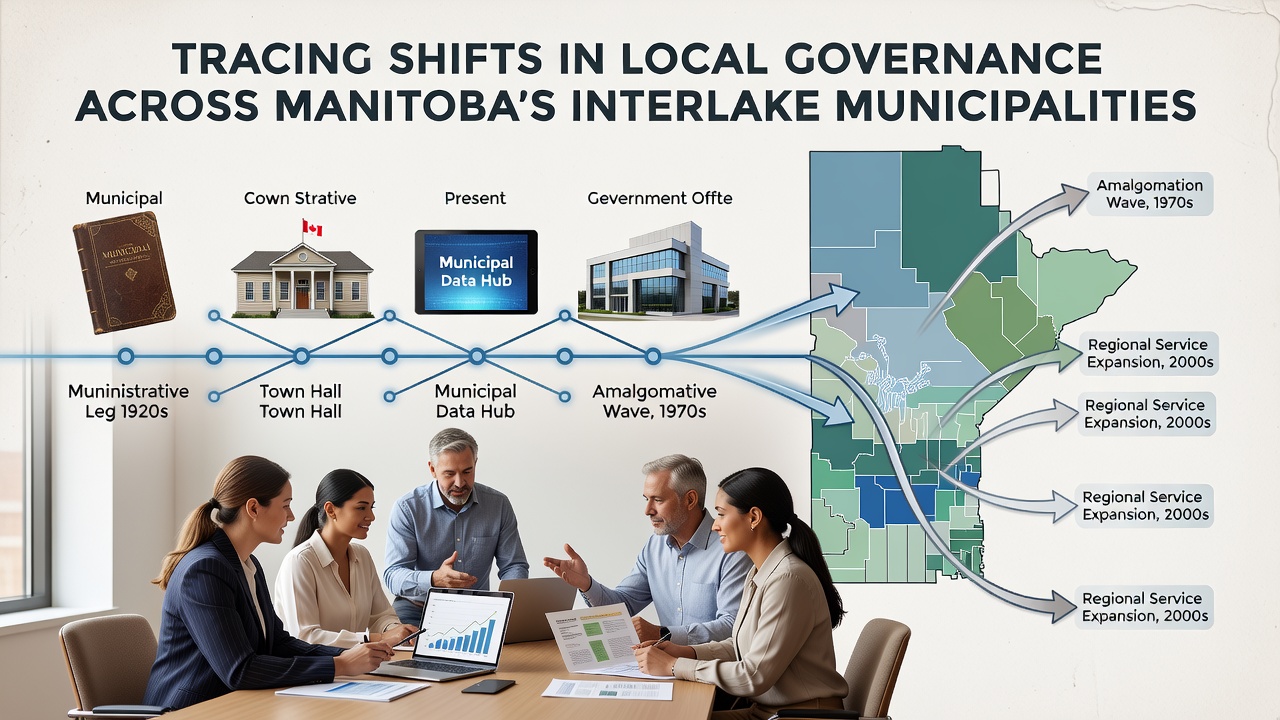
What's interesting about recent shifts is the integration of digital tools for public consultation, which several Interlake municipalities piloted after 2018. Councils in areas like the Rural Municipality of St. Laurent implemented online portals that increased participation rates in budget discussions by 22 percent, based on internal tracking data. Those who've examined comparable initiatives in other Canadian provinces observe similar patterns where technology reduces barriers for remote residents, although implementation timelines vary according to local infrastructure capacity.
Regional Coordination and Emerging Challenges
Interlake municipalities have formed planning districts that coordinate land-use policies across boundaries, addressing issues such as shoreline erosion and agricultural zoning that single councils previously handled in isolation. Evidence from Manitoba Municipal Relations indicates that these districts processed 340 development permits in 2024, reflecting steady economic activity in tourism and renewable energy sectors. But here's the thing: climate data compiled by Environment and Climate Change Canada shows increasing variability in precipitation patterns that directly affects drainage infrastructure budgets, forcing councils to prioritize long-term capital planning over shorter-term projects.
One study revealed that collaborative procurement among Interlake entities yielded average savings of 11 percent on equipment purchases between 2020 and 2025. People who've participated in these joint tenders note that standardized specifications streamline vendor selection while maintaining accountability through shared oversight committees. Meanwhile, workforce demographics present another layer of adjustment, with provincial labour statistics showing that 28 percent of municipal staff in the region will reach retirement age by 2030, prompting training partnerships with Red River College Polytechnic to build administrative capacity.
Conclusion
Tracing governance evolution across Manitoba's Interlake municipalities demonstrates how legislative frameworks, demographic trends, and technological adoption intersect to reshape administrative practices. Records from the past seven decades illustrate a consistent movement toward consolidated structures that balance local autonomy with regional efficiency, supported by data from sources including Manitoba Municipal Relations and academic analyses. As preparations advance for October 2026 elections and ongoing infrastructure needs, the patterns established in earlier decades continue to inform current decision-making processes across the region.